
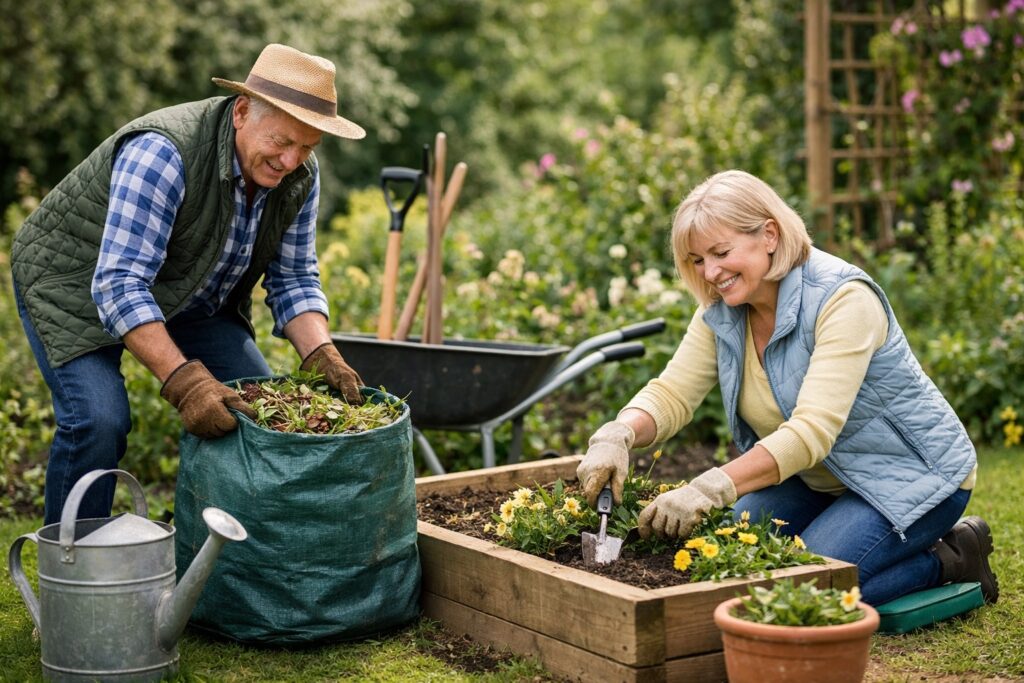
Gardening is one of the most rewarding ways to spend time outdoors. It keeps you active, helps you unwind and gives you the simple satisfaction of seeing something grow because of your efforts. What many people do not realise, however, is that gardening places real physical demands on the body, particularly on the back, shoulders and knees.
Although it often feels like a gentle pastime, gardening involves lifting, bending, twisting and reaching. These movements are quite different from the positions many of us spend most of our day in, such as sitting at a desk, driving or walking on flat ground. When the body is not prepared for these changes in movement, it is much easier to strain a muscle or irritate a joint.
A simple warm-up before you start can make a significant difference. Preparing your body for the work ahead helps your muscles and joints move more freely and reduces the risk of injury. It does not need to take long. Just a few minutes of gentle movement can help your body shift from rest to activity.
- Start by walking slowly around the garden for a few minutes. Roll your shoulders, shake out your arms and allow your breathing to settle into a steady rhythm. This helps increase circulation and gently wakes up the muscles you will soon be using.
- Next, sit down and place one foot on a low stool or step. Keep your knee straight and slowly lean your body forward until you feel a gentle stretch along the back of your thigh. Try to keep your lower back straight and bend from the hips rather than rounding your spine. Hold the stretch for about fifteen seconds, breathing calmly, then relax and repeat. Change legs and perform the same stretch on the other side. You should feel a stretch but never pain. If discomfort appears, ease back straight away.
- Stand upright and bring your hands together, interweaving your fingers. Turn your palms outward and stretch your arms up above your head. While holding the stretch, gently lean to one side for around ten seconds, then return to the middle and lean to the other side. Repeat this movement three times on each side. This helps loosen the muscles through the sides of the body and upper back.
- While still standing, wrap your arms around your body as though giving yourself a hug. Rotate gently to one side and hold for ten seconds, then return to centre and rotate to the other side. Repeat this a few times to encourage comfortable movement through the spine.
Once you feel a little looser, you are ready to begin your gardening. At this point it is also helpful to keep a few practical principles in mind that can protect your back while you work.
- Choose the right tools for the job. If something is just out of reach it is tempting to stretch or overreach, but this places unnecessary strain on the spine. A small stepladder or the correct long-handled tool will help you keep a stronger and safer position.
- Make sure your tools are the right size for you. Spades, forks, hoes and rakes should have handles long enough to allow you to work without stooping. When tools are too short, the back has to do far more work than it should.
- Be mindful when lifting and carrying. Filling watering cans completely can make them awkward and heavy, so it is often better to fill them halfway or use a hose instead.
- If you are using a wheelbarrow, avoid overloading it. Bend through your knees and hips rather than rounding your back, keep the barrow close to your body and maintain a steady, balanced posture as you move.
- Whenever you lift heavier objects such as garden bags or a lawn mower, try to keep them close to your body with your arms bent at your sides. Holding weight away from your body places much more strain on the back and shoulders.
- When working at ground level, bend your knees rather than leaning forward from the waist. Many people find it helpful to use a small gardening stool or kneeling pad. This allows you to work comfortably while taking pressure off the lower back.
- Try to avoid twisting through your spine while working. Keep your shoulders, hips and feet facing the direction of the task you are doing. If you need to change position, move your whole body rather than twisting just your upper half.
If back discomfort is something you experience regularly, it may also be worth making small adjustments to the way your garden is arranged. Simple changes can make gardening far more comfortable and allow you to continue enjoying it for many years.
- Raised flowerbeds can bring plants to a more manageable height, reducing the need to bend or reach. Keeping beds relatively narrow means you can access plants easily from either side.
- In smaller gardens, reducing lawn space can also decrease the need for frequent mowing. Applying mulch such as bark chips over exposed soil helps retain moisture and slows weed growth, which means less bending and digging over time.
With a little preparation and the right approach, gardening can remain a healthy and enjoyable activity rather than a cause of aches and pains. Looking after your body while you work allows you to keep enjoying the fresh air, movement and satisfaction that gardening brings.
If gardening does leave you with persistent back pain or stiffness, it may be helpful to seek professional advice. A chiropractor can assess how your spine and joints are moving and provide treatment and guidance to help you stay active and comfortable. Please get in touch if we can help.


 Copyright © Wokingham Chiropractic Centre • 29 Denton Road, Wokingham. RG40 2DX